
Rumeysa Gelgi measures 2.15 m. This figure, validated by the Guinness World Records, makes her the tallest living woman in the world. Behind this official data lies a daily life shaped by Weaver syndrome, a rare genetic condition that affects bone growth, joints, and the spine.
Weaver Syndrome: What Genetics Imposes on the Body
We often talk about record height, but rarely about what causes it. Weaver syndrome leads to accelerated growth from early childhood, with direct repercussions on the skeletal structure. For Rumeysa Gelgi, this translates into spinal disorders and nerve compression that limit her mobility.
Moving while standing remains difficult. She uses a wheelchair for most of her journeys and a walker for short distances. By rediscovering the story of the tallest woman in the world, we realize that exceptional stature is not just a spectacular physical fact, but a permanent medical constraint.
Medical follow-up in Turkey, her home country, involves regular examinations to monitor the evolution of joint problems and the risks of bone complications. The Guinness World Records has confirmed her height several times since 2022, each verification accompanied by a complete health assessment.

Rumeysa Gelgi and Daily Life with Record Height
Adapting a home, a vehicle, or even a simple bed for a person who is 2.15 m tall requires systematic customization. Standard furniture is unsuitable. Door frames pose a problem. Every living space must be rethought based on stature.
Rumeysa Gelgi now lives in the United States, a choice partly related to access to specialized medical facilities. The care related to her condition requires a multidisciplinary team: orthopedists, neurologists, physiotherapists.
Beyond the medical aspect, the social dimension weighs heavily. Every public outing attracts attention, requests for photos, and sometimes intrusive comments. She has stated several times that the hardest part is not her height itself, but being constantly perceived through it.
Tall Women on Social Media: A New Visibility
In recent years, a phenomenon documented by media such as BBC News and The Guardian has transformed the way very tall women become visible. TikTok, Instagram, and YouTube have become spaces where they share their daily lives, talk about plus-size fashion, health, and harassment.
Rumeysa Gelgi is part of this trend. Her Instagram account allows her to control her own narrative instead of suffering it in traditional media. She addresses body positivity and answers questions about her condition in a direct tone.
This movement goes beyond individual cases. Several tall content creators have formed active communities, with significantly increasing audiences. The recurring topics include:
- The difficulties in finding suitable clothing in mainstream stores, including in so-called “plus-size” brands that rarely exceed certain lengths for legs or bust
- Online and in-person harassment, with concrete testimonies about the response strategies adopted by these women
- Specific medical questions related to tall stature (back problems, circulation issues, hormonal monitoring), discussed without filters
This visibility has a concrete effect: it normalizes bodies that, until recently, appeared in the media only from a perspective of curiosity.
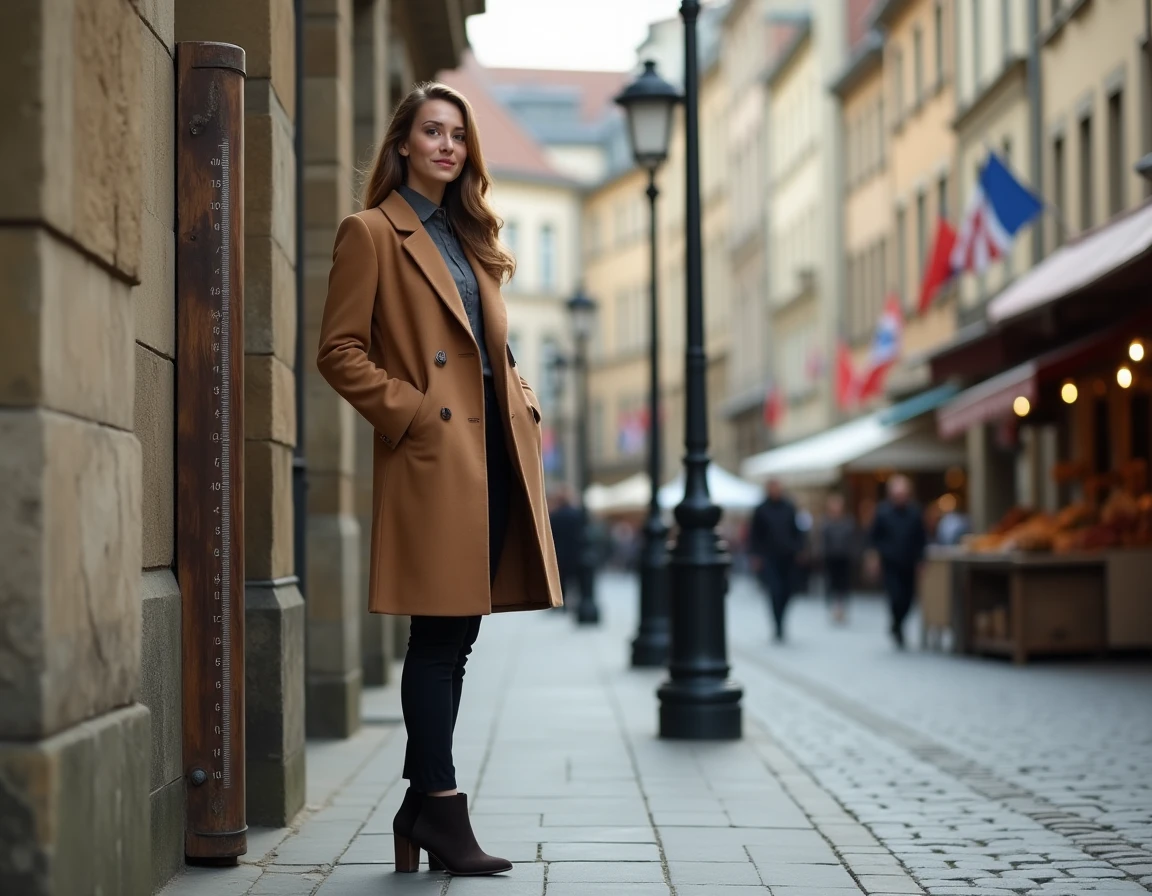
Trijntje Keever and Historical Women’s Height Records
Before Rumeysa Gelgi, other women made history with their stature. The earliest documented case is that of Trijntje Keever, born in 1616 in the Netherlands. According to legend, she reached 2.54 m before dying of cancer at the age of 17.
Evidence remains limited. We have a few pictorial representations and indirect testimonies. Historians attribute her growth to probable acromegaly. Her parents, from a modest background, showcased her at fairs to earn money, a common practice at the time for people with atypical physiques.
The difference between these historical cases and that of Rumeysa Gelgi lies in the rigor of verification. The Guinness World Records has also adjusted its categories over the decades, distinguishing between “tallest living woman” and “tallest woman ever.” The criteria for measurement and medical validation have significantly strengthened, making direct comparisons between eras difficult.
What the Archives Don’t Say
For Trijntje Keever and other cases prior to the 20th century, opinions vary on the reliability of reported measurements. The measuring tools of the time, the lack of standardized protocols, and the tendency to exaggerate in fair accounts make any certainty impossible.
However, it is known that tall stature in women has long been associated with superstitions or supernatural explanations, long before medicine understood the hormonal and genetic mechanisms at play.
Guinness Criteria for the Tallest Woman in the World: What Has Changed
The certification process of the Guinness World Records is not limited to taking a measuring stick. For the category of the tallest living woman, several conditions must be met:
- A measurement carried out by a certified health professional, standing and without shoes, according to a precise protocol
- A complete medical file including the diagnosis of the pathology responsible for the growth
- Periodic checks to confirm height and document health status
- A clear distinction between living record and historical record, with different levels of evidence
This rigor explains why very few women appear in the official records. The record is not self-proclaimed; it is medically certified.
Rumeysa Gelgi obtained her first Guinness record while she was still a teenager, in the category of the tallest living teenager. Recognition as the tallest living woman came later, after new measurements and documented medical follow-up. This journey alone illustrates the patience and transparency that the process requires.