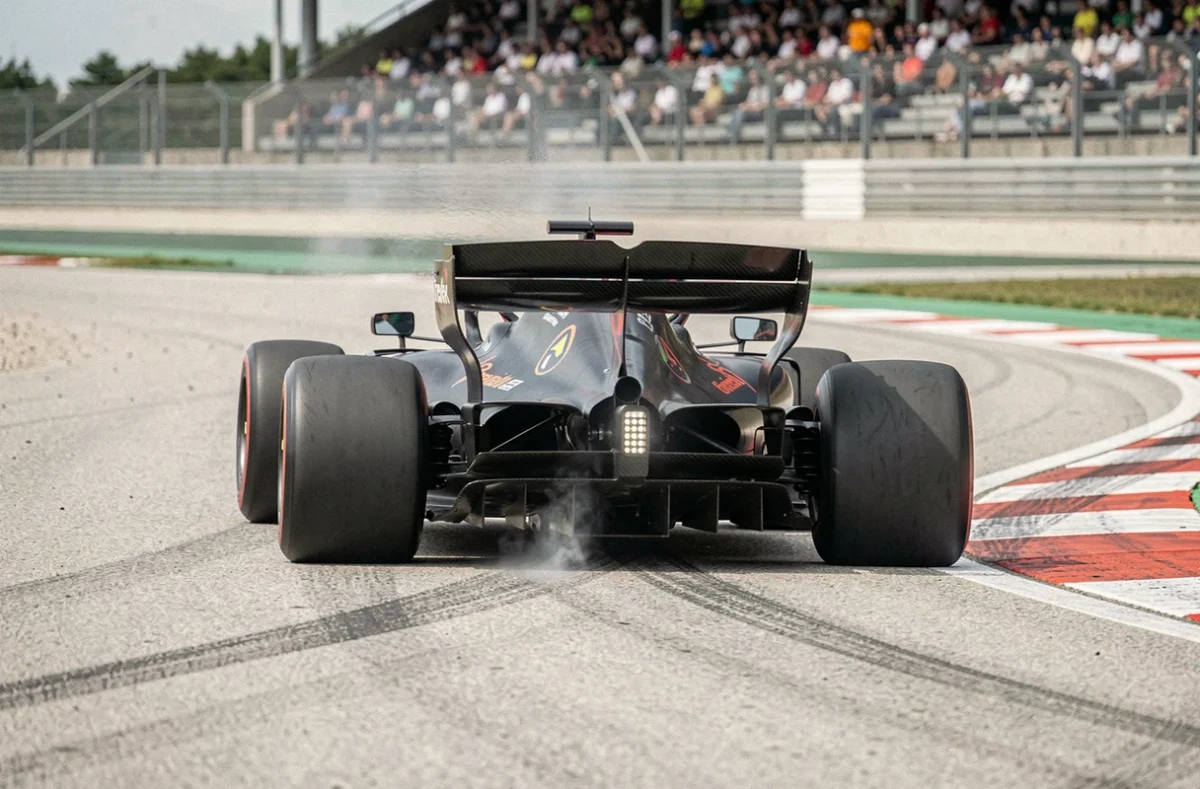
In Formula 1, the driver does not always keep the pedal to the metal on the accelerator. Well before the braking zone, they release the pedal and let the car decelerate naturally over several dozen meters. This phase, called lift and coast, is an integral part of managing a modern race. It influences fuel consumption, brake lifespan, and sometimes even the final result.
Energy recovery and lift and coast in F1: two distinct mechanisms
A common misunderstanding is to believe that lifting off the accelerator automatically recharges the battery. This is not the case. The most significant energy recovery occurs during braking, thanks to the MGU-K which converts kinetic energy into electricity.
The lift and coast, on the other hand, primarily affects the internal combustion engine. By releasing the accelerator before the usual braking point, the driver reduces the amount of fuel injected into the cylinders. The car slows down through engine braking, without stressing the brake discs or consuming fuel.
The energy recovered during this gentle deceleration phase remains modest compared to that captured during braking. To master lift and coast in F1, it is essential to understand that lifting off does not mean recharging the battery, but rather saving fuel and preserving the brakes.

Where and when to lift off: the compromise lap by lap
Have you ever noticed that a driver can lose several tenths in a single straight without any apparent reason? It is often the lift and coast that explains this gap. The choice of when to release the accelerator varies each lap based on three parameters.
- The state of charge of the battery: if the electric reserve is low, the engineer may ask the driver to lift off earlier to compensate for the lack of deployment in the following laps.
- The amount of fuel remaining: at the end of the race, when the tank is light, the need for lift and coast decreases. At the beginning of the race, with a heavy car, it may be more pronounced.
The gain is measured over several laps, not just one lift-off zone. Energy saved in one place can be redeployed later, for example, to attack out of a slow corner. However, lifting off too early or in the wrong place costs more time than it gains back later.
The role of the beep in the helmet
The driver does not decide alone. An audible signal in their helmet, calibrated by the team, indicates the precise moment to release the pedal. This beep takes into account the allowed fuel flow, battery charge, and real-time race strategy.
The driver can choose to ignore it on an attack lap, but they will have to compensate in the following laps. The lift and coast is a credit that the driver always pays back.
Engine calibration and team strategy: what happens off the track
Reducing lift and coast to just a driver gesture would be incomplete. Advances in energy management also come from the software calibration of the power unit, optimizing the interactions between the thermal engine, recovery, and electric deployment.
A better software setup reduces the need to lift off. If the engine deploys electric energy more efficiently in acceleration zones, the driver can stay on full throttle longer and compensate elsewhere. This optimization work is done between races, at the factory, on engine test benches.
The balance between lift and coast and pure performance is therefore a team compromise. The driver executes, but the margin they have directly depends on the quality of the power unit and its programming.
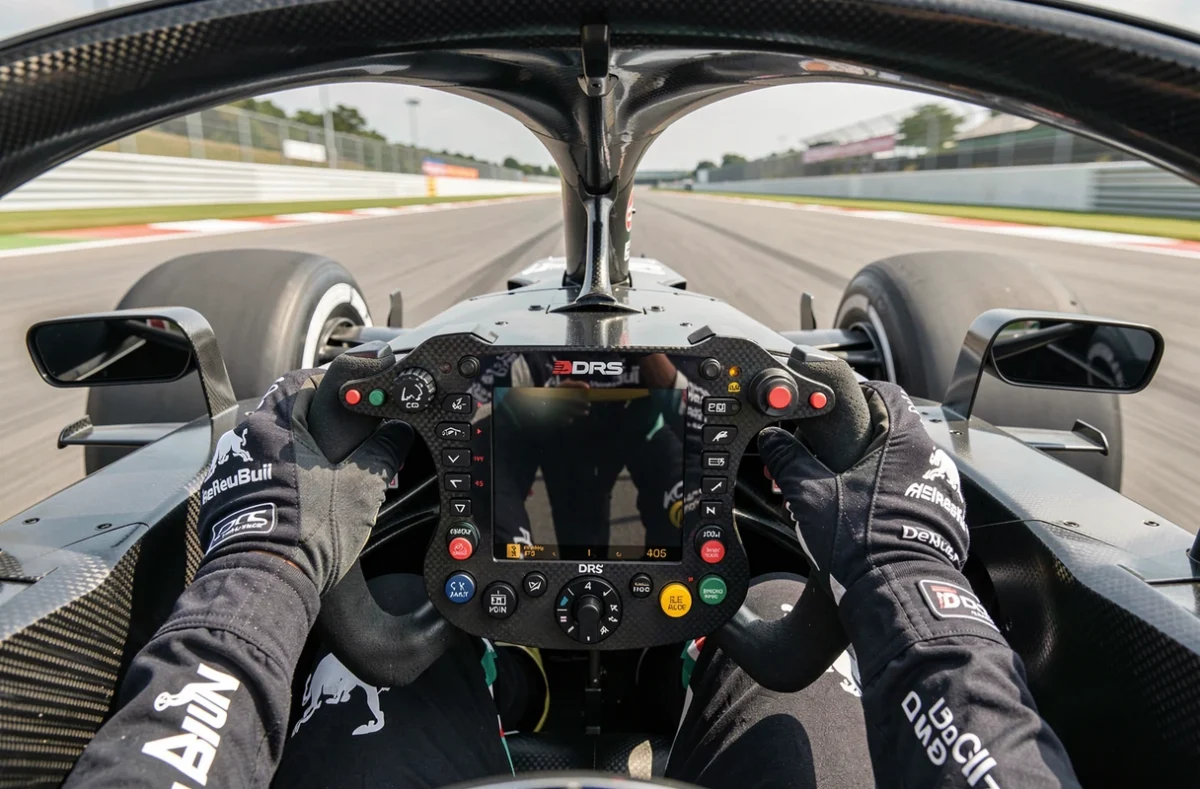
2026 Regulations and energy management in qualifying
Why does this topic become even more central for the next generation of F1? The 2026 technical regulations increase electric power and change how drivers solicit energy. Esteban Ocon provided a concrete insight during testing: staying fully on the accelerator all the time loses time, even in qualifying.
This is a break. Until now, qualifying was the only time when the driver could ignore fuel management and attack without compromise. Starting in 2026, battery charge will become a parameter to manage even on a fast lap.
In practical terms, the driver who manages their lift-off phases better to preserve electric energy can redeploy it in areas where the time gain is maximal. The lift and coast extends from races to qualifying in 2026.
What this changes for the spectacle
A fast driver will no longer just be one who brakes the latest. The ability to optimize every meter of track, to modulate the accelerator precisely, and to collaborate with their engineers on energy strategy will weigh more in the final result.
The lift and coast remains an invisible technique for the spectator, but it regularly separates drivers who finish in the points from those who finish outside the scoring zone. With the 2026 regulations, this discreet technique could become the most underestimated differentiating factor on the grid.