A 30°C cycle with standard detergent does not disinfect laundry. It shifts some of the bacterial load, introduces other bacteria from the drum, and leaves behind microbial residue that multiplies as soon as the fabric stays damp. Managing dirty clothes day to day is less about the reflex to sort by color and more about following a series of practical steps, from storage to drying, where each stage determines the textile’s actual hygiene level when worn.
Residual bacterial load after washing: what temperature really changes
A study by Ghent University found that after synthetic T-shirts were washed, bacteria from the machine itself colonized the fabric, partially replacing its original microbial flora. Low-temperature washing therefore shifts the problem rather than solving it.
The evidence is clearer for kitchen textiles. Dish towels, cleaning cloths and towels that come into contact with food surfaces accumulate bacteria associated with foodborne illness, and washing at 60°C with detergent is significantly more effective than a 40°C cycle at removing them. These textiles should be washed separately from the rest of the laundry.
We recommend setting aside a dedicated wash for these textiles and not mixing them with everyday clothes. The minimum useful temperature for significantly reducing bacteria on heavily used laundry remains 60°C with a detergent containing active ingredients that work at this temperature.
For people sensitive to household allergens, low-temperature washing is not enough to eliminate dust mites. A 60°C cycle is still recommended for this type of laundry.
Storing dirty laundry and microbial growth: baskets, time and moisture
A garment worn after a workout, still damp with sweat and left in a ball in a closed basket, creates an ideal breeding ground. Bacteria and fungi multiply rapidly on damp fabric kept in a confined space at room temperature. The guidance in Annonces Tout Net and clothing hygiene explains in detail how storage can drive this growth.
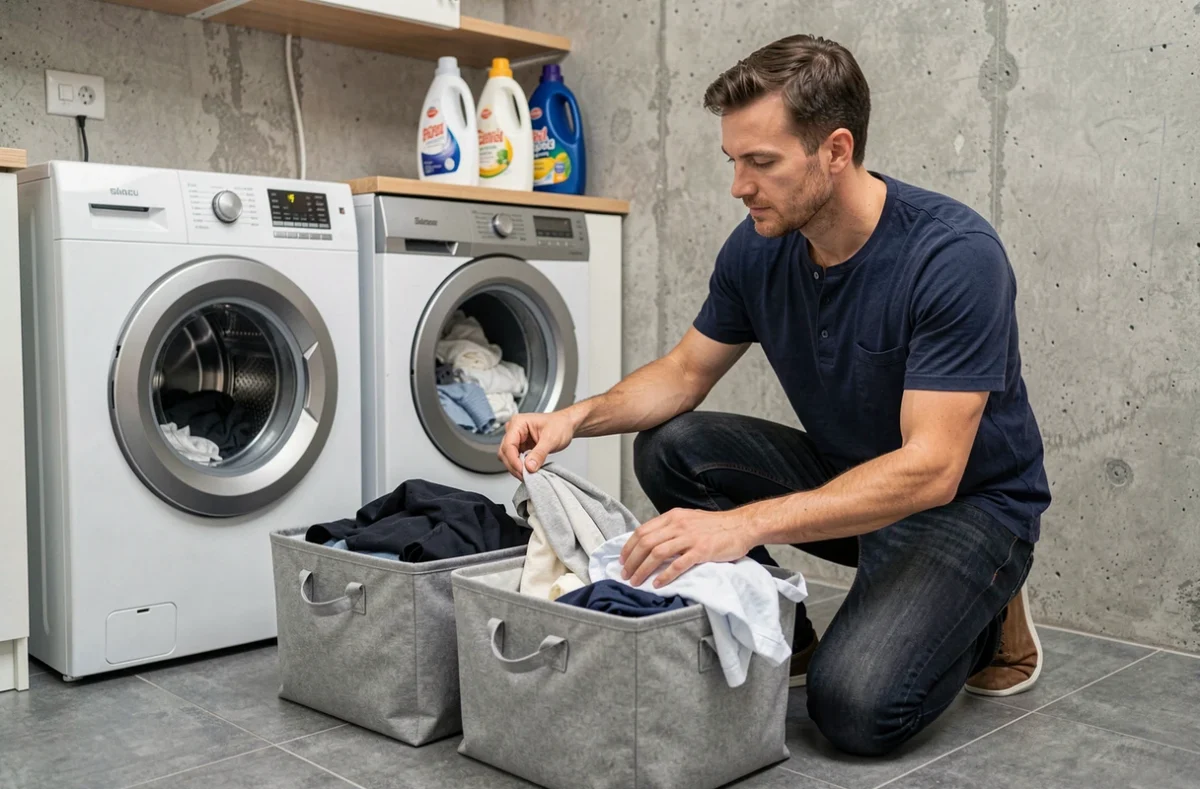
The first practical step is to separate damp laundry from dry laundry before even thinking about sorting by color. A well-ventilated basket (wicker, mesh or wire) helps limit condensation. Sportswear and towels used after showering should be hung up briefly before being placed in the laundry hamper.
- Dish towels and kitchen cloths: keep them in a separate bag or compartment and wash them separately at a high temperature.
- Underwear and socks: as they come into direct contact with the skin, wash them after each use rather than leaving them in the basket for several days.
- Sportswear: never leave it balled up while damp for more than a few hours, or persistent bad odors may develop quickly, even after washing.
- Sheets and pillowcases: change them weekly, especially in hot weather or for people sensitive to dust mites.
How long laundry is stored matters just as much as the conditions. A basket left to pile up for an entire week in summer becomes a reservoir of germs that a regular wash will not fully eliminate.
Laundry left in the drum: when to run another cycle
Laundry left damp in a closed washing machine can become a breeding ground for bacteria within hours. Specialist publications report that once a certain amount of time has passed after the cycle ends, it is better to run a full wash again rather than simply hang the laundry out to dry. The warm, enclosed environment of the drum speeds up bacterial growth and creates musty odors that are difficult to remove during drying.
The habit to build: take the laundry out as soon as the program ends. If that is not possible within the next hour, an extra spin followed by immediate drying can limit the damage. After several hours, restarting a short cycle at an appropriate temperature is the only reliable option.
Drum maintenance and residual biofilm
The machine itself harbors a bacterial biofilm that builds up again between cycles. A high-temperature empty cycle, run regularly with a suitable detergent, reduces this residual load. Without this maintenance, every wash reintroduces microorganisms into clean laundry, undoing some of the cycle’s hygienic benefits.
Synthetic fibers, detergent and microplastic filtration
Synthetic textiles (polyester, polyamide and elastane) pose a twofold problem. They retain body odors more than cotton, and every wash releases plastic microfibers into wastewater. France now requires microplastic filters to be installed in new washing machines, a regulation that is gradually changing the installed base.
The choice of detergent interacts with the type of fiber. Eco-friendly detergents made with plant-based surfactants reduce environmental impact, but at low temperatures their effectiveness on synthetic textiles heavily soiled with sebum and bacteria remains lower than that of conventional formulas. For synthetic sportswear, a prewash or short soak improves results without raising the temperature.
- Cotton clothes: withstand high temperatures and are compatible with most detergents.
- Synthetic sportswear: washing at 30–40°C is sufficient if the laundry has not been left damp for long, but an occasional 60°C cycle provides a thorough clean.
- Cotton-synthetic blends: follow the care label for the most delicate component, while making sure not to overload the drum so the laundry can move freely.
How often to wash different types of clothing and when seasons change
Wearing jeans for several days in a row does not raise the same hygiene concerns as wearing a T-shirt in direct contact with the underarms. How often to wash clothes depends on skin contact, sweating and the environment.
Underwear, socks and T-shirts should be washed after each wear. Trousers, skirts and sweaters worn over underwear can be worn several times. In summer or during physical activity, washing frequency naturally increases for all clothes worn close to the body.
Adjusting how often you wash also helps prevent overloading the machine, which reduces the cycle’s mechanical effectiveness and the detergent’s performance. Filling the drum to two-thirds capacity offers the best balance between water and energy use and wash quality.
Drying completes the hygiene process. Laundry that is not fully dry and is still slightly damp when put away becomes a breeding ground for mold and odors again. Air-drying outdoors in the sun remains the most effective way to naturally reduce residual germs.