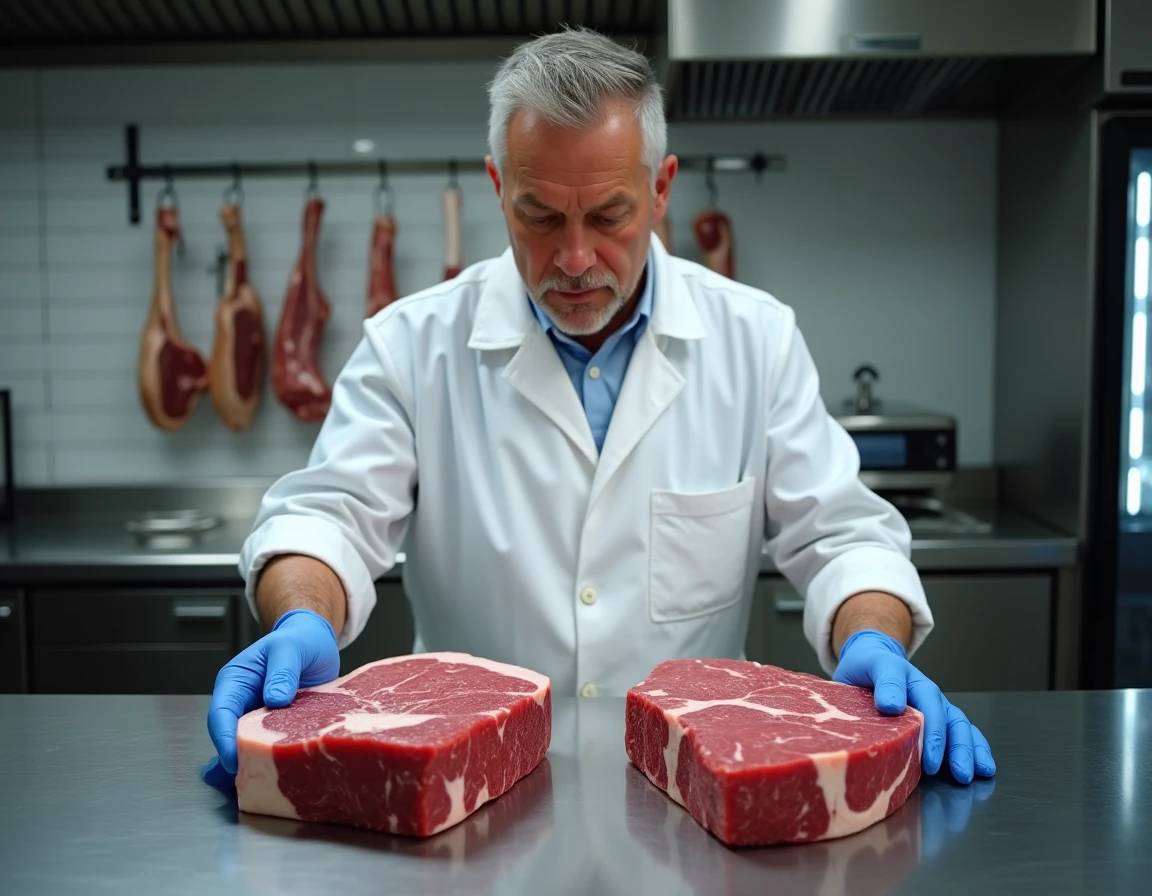
In the meat aisle or on an online shop, a piece of beef labeled USDA Choice catches the eye. The grade promises tender, well-marbled meat. But this label says nothing about how the animal was raised, fed, or cared for. Distinguishing between organic USDA Choice beef and non-organic requires looking beyond the quality grade displayed on the packaging.
USDA Choice Grade and Organic Certification: Two Systems That Don’t Communicate
The USDA grading (Prime, Choice, Select) evaluates the carcass after slaughter. Inspectors examine the marbling, muscle maturity, and fat texture. Grain-fed beef in intensive feedlots can achieve the Choice grade, just like beef raised on certified organic pastures.
The Choice grade only informs about the taste quality of the meat, not the production conditions. It’s a tasting score, not a breeding label. Two steaks that appear identical, bearing the same grade, can come from radically different supply chains.
To learn more about this topic, you can find out more about USDA Choice with Le Bio du Coin, which details the subtleties of this American grading system.
Organic certification, on the other hand, falls under a different administrative circuit. In the United States, it is governed by the USDA’s National Organic Program (NOP). A farmer must have their practices certified by an independent organization before they can place the USDA Organic logo on their meat, regardless of the grade obtained.
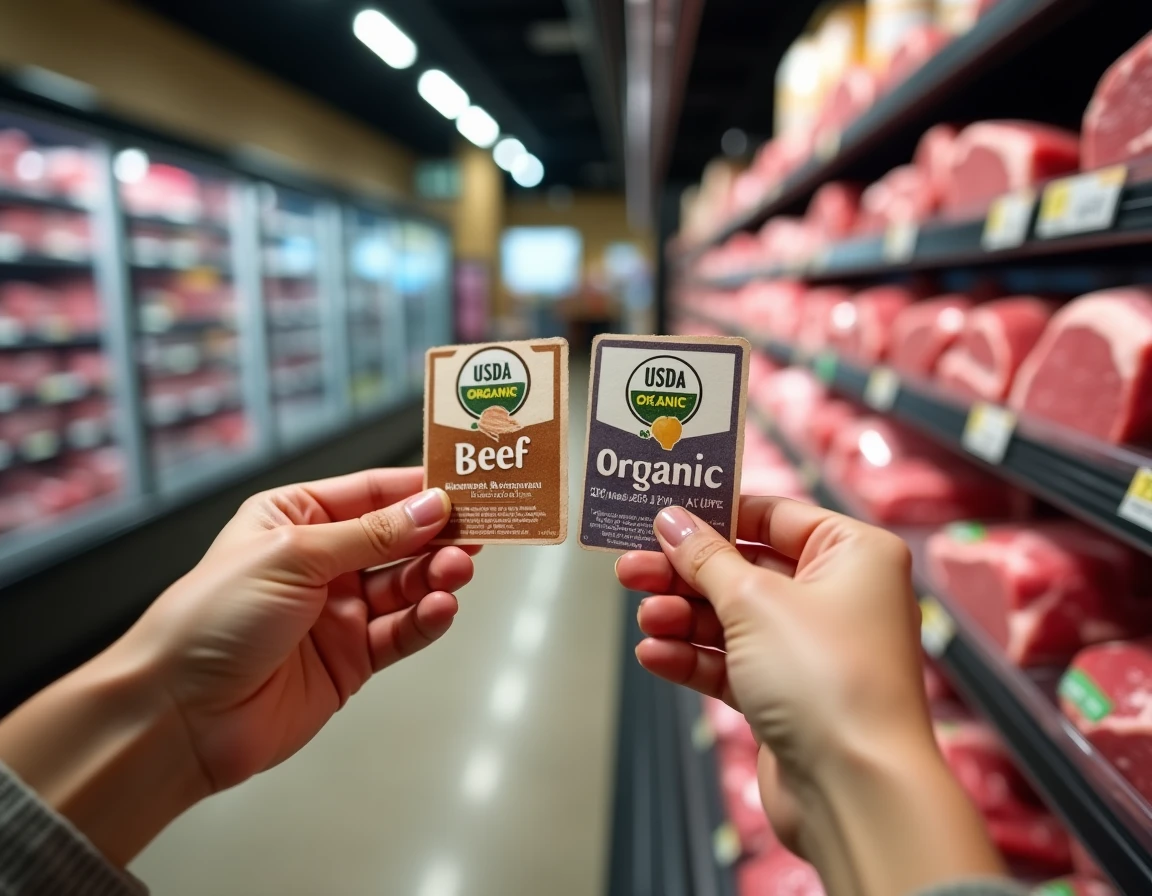
Feeding, Treatments, Pasture: What Separates Organic from Conventional
Have you noticed the terms “natural,” “grass-fed,” or “hormone-free” on some packaging? None of these claims equate to organic certification. They are not regulated in the same way and can be misleading.
Here are the concrete criteria that differentiate certified organic USDA Choice beef from conventional Choice beef:
- Animal feed must come from certified organic crops, free from synthetic pesticides and GMOs, throughout the animal’s life.
- Antibiotics and growth hormones are prohibited in organic production. In conventional farming, their use is allowed under certain conditions.
- Access to pasture is mandatory in organic farming, with minimum durations of outdoor access. Conventional beef can spend most of its life in a feedlot without violating any rules.
- Veterinary treatments in organic farming prioritize prevention. An animal treated with antibiotics loses its organic status.
These differences are not visible on the plate. Marbling, tenderness, and juiciness depend on the grade. Farming practices, however, remain invisible without dedicated certification.
Strengthening Organic Enforcement in the United States: The “Strengthening Organic Enforcement” Rule
Since the implementation of the Strengthening Organic Enforcement rule in 2024, the USDA has significantly tightened controls across the entire organic production chain. Animal supply chains (beef, poultry) are particularly targeted.
Every intermediary in the supply chain must now be certified: importers, processors, warehouses. This traceability requirement greatly reduces the margin for falsely labeled organic meats. Before this rule, some links in the chain escaped audits.
For consumers, this means that the USDA Organic logo on Choice beef now offers a stronger guarantee than it did a few years ago. The certification covers the seeds used for forage crops, livestock feed, farming conditions, and post-slaughter stages.
And in France, what approach should be taken?
American beef imported and sold as organic in France must comply with European organic regulations in addition to American standards. The simple USDA Choice grade is never sufficient to qualify meat as organic in Europe. The EU-US equivalence agreements on organic products govern these imports, but French consumers must check for the presence of the European organic logo (the Euroleaf) in addition to any American claims.
In practice, the vast majority of USDA Choice beef sold in France remains conventional. The supply chains for certified organic American beef imported under equivalence agreements represent a marginal share of the market.
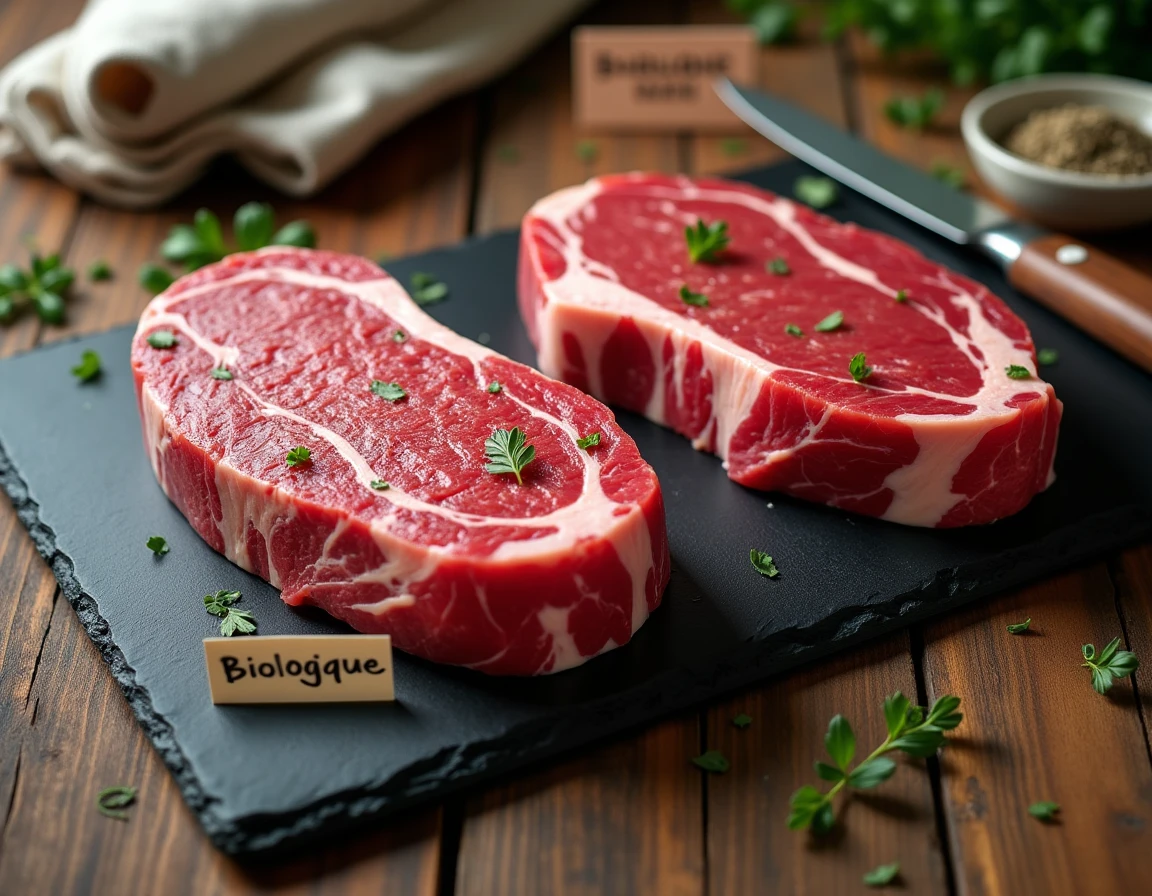
Reading the Label on USDA Choice Beef: Reliable Indicators
When faced with packaging, a few reflexes can help distinguish between marketing and actual certification.
- The USDA Organic logo is the only regulatory indicator of organic status in the United States. Without this logo, the meat is not organic, even if other promotional claims appear on the packaging.
- The terms “natural,” “grass-fed,” or “no added hormones” describe specific practices but do not guarantee complete organic production.
- In France, look for the Euroleaf (European organic logo) to confirm that an imported product meets European organic farming standards.
The grade (Prime, Choice, Select) and organic certification address different questions. The first informs you about tenderness and probable taste. The second informs you about the living conditions of the animal and the inputs used during farming.
Marketing Claims to Put into Perspective
“No antibiotics,” “raised outdoors,” “grass-fed”: these formulations can coexist with non-organic farming. They sometimes indicate a quality approach, but only certification by an accredited organization legally commits the producer to the entire organic specification.
A USDA Choice beef remains primarily a carcass grade. The question of whether it is organic or non-organic is determined solely by the presence of an official, verifiable certification, not by the taste quality grade. Keeping this distinction in mind simplifies every trip to the aisle.