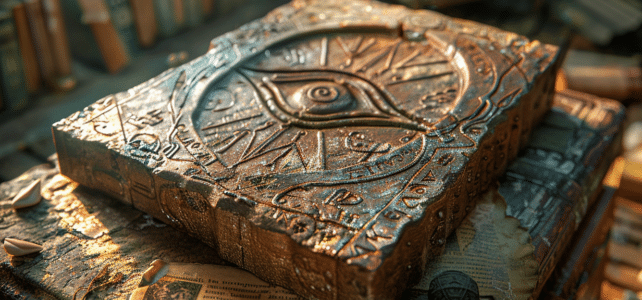
For millennia, ancestral symbols have fascinated and intrigued. Imbued with deep meanings, these marks left by our ancestors continue to awaken the curiosity of researchers and enthusiasts of mystical history. Whether engraved on ancient monuments, woven into mysterious manuscripts, or encoded in the rituals of secret societies, these symbols are often at the heart of esoteric practices. Their study reveals a lost wisdom and offers a glimpse into the beliefs and knowledge of ancient cultures. It is a true invitation to decipher a universal language, reflecting the human quest for meaning and connection to the divine.
Ancestral Symbols and Their Meaning Through the Ages
Throughout history, art, and the spiritual world, ancestral symbols have carried within them the strength of spiritual journeys and connection with nature. Consider the lemurian symbol, enigmatic and little-known, which refers to a vanished civilization, allegedly advanced and in harmony with the environment. The interest in this symbol, like that of the venerable tree of life or the figures of Greek mythology, illustrates a perpetual quest for ancient teachings and mysteries to unravel.
Within this research, the bestiary emerges as a collection of real or fantastical animals, occupying a prominent place. The balance between the fantastic and the naive that it represents can be found in various fields, including the collections of major fashion creators such as Marc Jacobs and Stella McCartney. The eye, an iconic and omnipresent motif, was already featured in the amulets of ancient Egyptians and persists in modernity, represented by brands such as Kenzo.
The influence of symbols in our culture extends beyond aesthetics, touching on shamanism and its spiritual practices. Sensitive to aesthetic charms, shamans of yesterday and today use symbols to navigate between spiritual worlds, illustrating the continuity of esoteric traditions. The Zodiac, a collection inspired by the constellation, created by Elsa Schiaparelli, shows how ancient astrology continues to resonate with contemporary audiences. In these ancestral motifs, find a bridge between the past and the present, testifying to the unchanging human fascination with the cosmos and its mysteries.
The Contemporary Resonance of Ancestral Esotericism and Its Cultural Impact
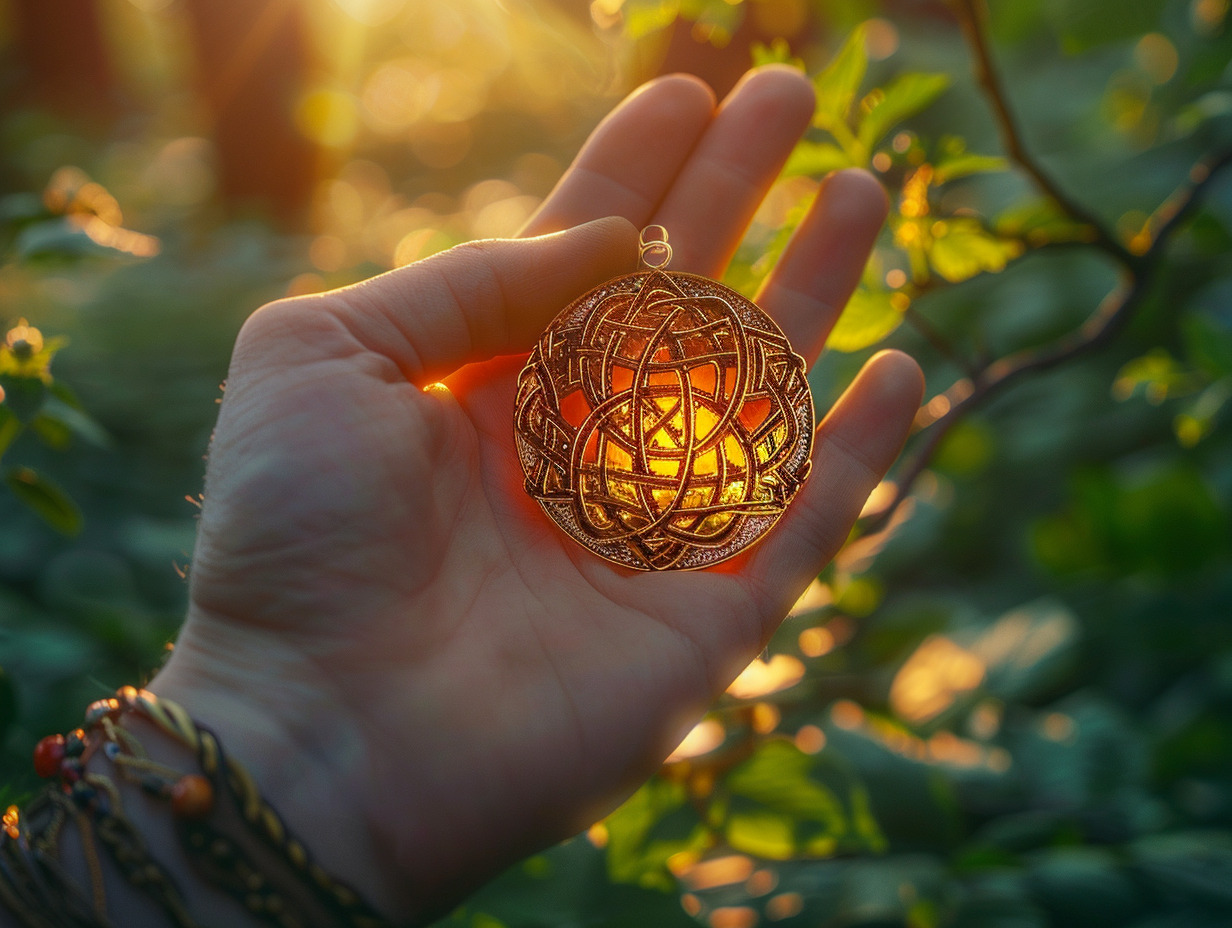
Fashion, a mirror of a society in search of meaning, echoes an ancestral esotericism whose resonance transcends time. The autumn-winter collections abound with symbols of all kinds, reflections of a fascinating inner journey. Houses such as Givenchy and Gucci revisit the major arcana of tarot, these cards sublimated into textile patterns, accessories, and runway themes. Riccardo Tisci, at Givenchy, seizes upon them in a moment of mystical crisis, while Alessandro Michele, creative director of Gucci, describes his collection as a psycho-geographical map, revealing emotional territories as vast as they are varied.
Fashion creators, like Hedi Slimane paying homage to Yves Saint Laurent, or Sarah Burton, who, at the helm of Alexander McQueen, explains that her collection is that of a woman almost in a trance, are just a few examples of the profound impact of esotericism on contemporary culture. Astrologer Susan Miller, gathering over 6 million people each month, also testifies to the enthusiasm for this mystical knowledge that extends beyond the boundaries of fashion. Frédéric Godart, a fashion sociologist, elucidates this attraction of creators to mysticism and the religious, symbols of a search for a deeper connection to existence.
The cultural impact of ancestral esotericism is measured in the collaborations between creators and artists. Miuccia Prada, working with French artist Christophe Chemin, envisions her collection as a collage of what is happy or painful, a reflection on the emotional patchwork of our time. This symbiosis between fashion and esotericism offers a new perspective on our cultural heritage, where tarot and its mysteries become the language of a renewed dialogue between the past and the present.