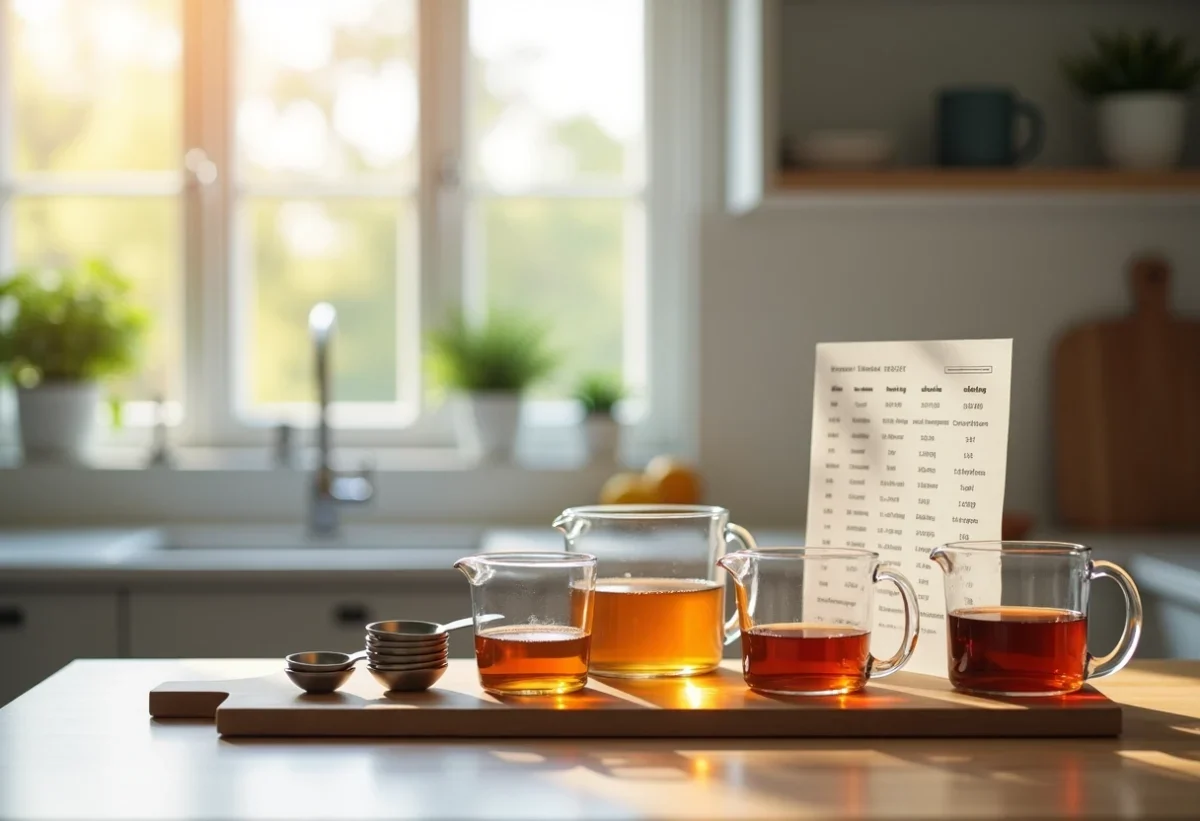
Preparing flavorful dishes often relies on precise measurements, especially when it comes to liquids. However, with milliliters, ounces, and cups, it’s easy to get confused. Fortunately, there are simple tips to convert these measurements without stress.
A conversion chart can become your best ally in the kitchen. Writing down the most common equivalents, such as 1 cup equaling 240 ml, helps improve accuracy. Dedicated mobile apps offer instant conversions, making international recipes more accessible. With these tools, cooking becomes a breeze, even with varied measurements.
The Basics of Liquid Measurement Conversion in Cooking
To succeed in your recipes, master the conversions of liquid measurements. Whether you cook daily or for special occasions, knowing the equivalents is an essential asset.
Common Units of Measurement
In cooking, liquids are often measured in milliliters (ml), centiliters (cl), and liters (l). Here are some basic equivalents:
- 1 liter (l) = 100 centiliters (cl)
- 1 centiliter (cl) = 10 milliliters (ml)
Converting precise volumes is essential to avoid mistakes. For example, if a recipe calls for 200 ml in cl, simply divide by 10 to get 20 cl.
Essential Tools
To facilitate these conversions, use tools such as:
- Measuring cups
- Measuring spoons (teaspoon, tablespoon)
- Kitchen scales with conversion function
These instruments allow for accurate measurements and help adapt recipes to your needs.
Practical Conversion Chart
A conversion chart can be extremely helpful. Here’s an example for common measurements:
| Volume | Milliliters (ml) | Centiliters (cl) |
|---|---|---|
| 1 teaspoon | 5 ml | 0.5 cl |
| 1 tablespoon | 15 ml | 1.5 cl |
| 1 tea cup | 200 ml | 20 cl |
With these tools and tips, you can approach any recipe with confidence, easily adapting liquid measurements to your needs. 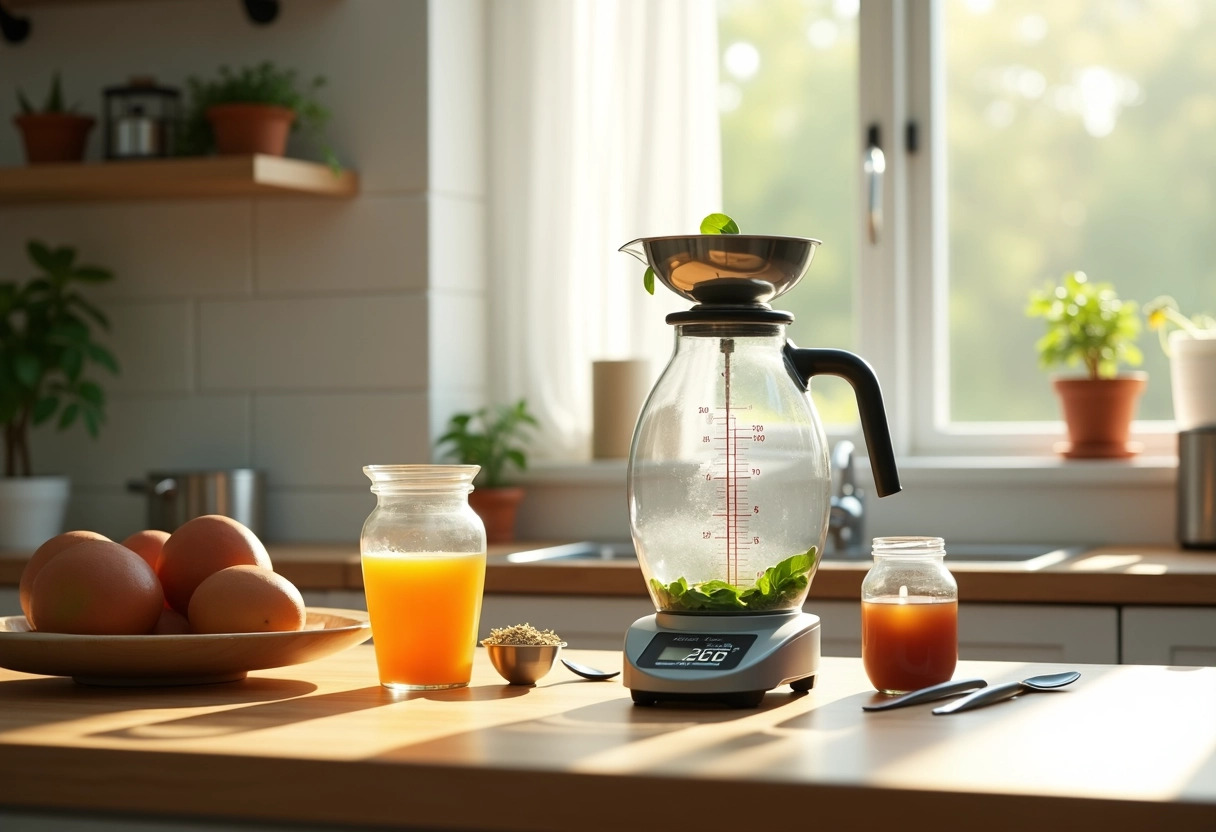
Techniques and Tips for Accurate Conversions
For precise conversions, use appropriate utensils. Several tools make the task easier in the kitchen:
- Teaspoon: measures about 5 ml
- Tablespoon: measures about 15 ml
- Coffee cup: measures about 10 cl
- Wine glass: measures about 100 ml
Choose utensils based on the volumes to measure. For larger quantities, prefer a measuring cup or a kitchen scale with a conversion function. These instruments ensure increased accuracy, essential for successful recipes.
Adapting Measurements According to Ingredients
Different ingredients have varied densities, influencing conversions. For example, 1 ml of water weighs 1 gram, but 1 ml of syrup weighs more. Consider the density of each ingredient for accurate measurements. For some common ingredients:
- Eggs: about 50 g per unit
- Carrot: about 100 g per unit
- Banana: about 150 g per unit
For specific ingredients, consult conversion tables or reliable resources like www.latabledejeanne.net. This ensures you don’t make mistakes that could compromise your culinary preparations.
Using Temperatures
Adjust cooking temperatures according to the measurements of the ingredients. Temperature variations affect the consistency and cooking of liquids. For optimal results, follow the specific recommendations for each recipe and adjust the temperatures accordingly.
With these techniques and tips, you can convert liquid measurements accurately, ensuring the success of your recipes.