Applying argan oil to the face, rubbing the skin with a rough fabric glove, mixing plant powders in a bowl before applying them as a mask: these gestures have existed for centuries. Ancestral beauty rituals are not mere historical curiosities. They rely on ingredients that modern dermatology is beginning to validate, and their care logic remains applicable today.
Why Science is Interested in the Ingredients of Ancestral Rituals
Have you ever noticed that certain ingredients appear in almost all skincare traditions, regardless of culture? Vegetable oil, clay, fermented or macerated plants appear in both Moroccan rituals and Ayurvedic or Japanese practices.
This is no coincidence. Several studies published between 2022 and 2024 in the Journal of Ethnopharmacology and Frontiers in Pharmacology document a rise in scientific interest in these traditional practices. Researchers are analyzing ingredients like fermented oils and clay baths to understand their mechanisms of action on the skin barrier.
This validation work is a game changer. Previously, these recipes were passed down orally, without biochemical explanation. Today, serious players are funding real clinical studies on ancestral practices, driven in part by the tightening of European regulations. Regulation (EU) 655/2013, reinforced by updated guidelines in 2023, prohibits brands from suggesting quasi-medical effects (“miracle anti-aging,” “immediate lifting effect”) without solid evidence.
For those who wish to discover the rituals on Blog Beauté, this requirement for proof is good news: it helps distinguish truly effective practices from mere marketing.
Black Soap, Ghassoul, and Kessa Glove: The Logic of Moroccan Skincare
Rather than listing rituals from around the world without delving into them, let’s focus on a complete and reproducible example. The Moroccan hammam ritual follows a precise sequence that has endured through the centuries, and each step serves an identifiable dermatological function.
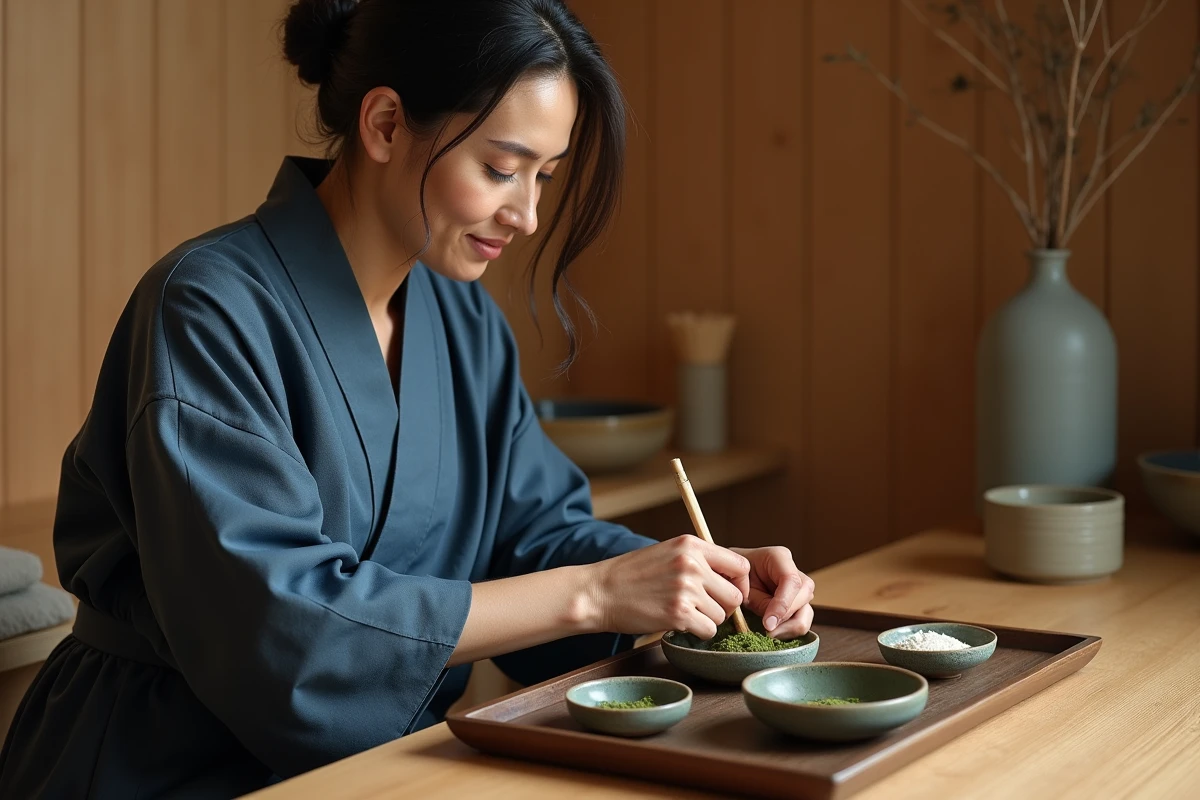
The first phase relies on steam. The humid heat opens the pores and softens the outer layer of dead skin cells. There’s no need for a traditional hammam: a warm towel placed on the face for a few minutes produces a comparable effect.
Next comes the application of black soap made from olive oil. This soap, made by saponification, hardly lathers. It acts as an emollient film that prepares the skin for exfoliation. It is left on for several minutes.
Exfoliation is done with the kessa glove, a fabric with a granular texture. The gesture is always the same: long movements, in one direction, without excessive pressure. The rolls of dead skin that appear are a sign that the superficial stratum corneum is detaching. This mechanical process is gentler than a grain scrub if the gesture remains measured.
Final step: the application of ghassoul (mineral clay from the Middle Atlas), often mixed with rose water. Ghassoul absorbs excess sebum without stripping, thanks to its layered structure that captures impurities through adsorption. The skin remains supple after rinsing, which distinguishes this clay from drier green clays.
- Black soap prepares the skin without stripping it, thanks to its saponified olive oil base
- The kessa glove mechanically exfoliates the stratum corneum without plastic microbeads
- Ghassoul purifies through mineral adsorption, suitable for combination to oily skin
- Rose water tones and soothes after treatment, reducing post-exfoliation redness
Argan Oil and Shea Butter: What Ethical Bioprospecting Changes
Argan oil and shea butter are two pillars of ancestral African beauty rituals. Berber women have used argan for generations to protect the skin from drying out. In West Africa, shea serves both as a skincare treatment and a natural sunblock.
Their global success has created a problem. For a long time, brands exploited these ingredients without involving the communities that held the knowledge. The 2024 report from the United Nations Environment Programme on biodiversity in cosmetics documents this marketing appropriation, particularly in Latin America and Oceania.
Since 2023, several brands have established ethical bioprospecting charters with contractual traceability and value sharing. L’Oréal and Natura &Co highlight these commitments in their 2023-2024 CSR reports. In practical terms, this means that producer cooperatives are compensated not only for the raw material but also for the transmission of associated know-how.
Why is this relevant for your skin? Because the quality of an ingredient directly depends on its production chain. Cold-pressed argan oil from a certified cooperative retains its fatty acids and vitamin E. Industrial oil extracted by chemical solvent loses some of these active compounds. Choosing a traceable product also means choosing a more effective product.
Adapting an Ancestral Ritual to a Modern Skincare Routine
Reproducing a complete ritual every day makes no sense. Exfoliating with the kessa glove, for example, should not exceed once a week to avoid weakening the skin barrier. Adapting these practices requires understanding their logic rather than copying each step.
- Oil cleansing (inspired by Japanese double cleansing): apply a vegetable oil to dry skin, massage, then rinse with a gentle cleanser. Suitable in the evening to remove makeup and pollution
- Clay mask (ghassoul or kaolin): once or twice a week, applied for a maximum of ten minutes to avoid drying out
- Final hydration with a fatty substance (argan, shea, coconut oil depending on skin type): a few drops are enough on still damp skin to seal in hydration
The idea is not to replace a complete cosmetic routine with homemade recipes. It is to reintegrate simple gestures, based on ingredients whose effectiveness is documented, into daily care. An ancestral ritual works when we respect its sequence logic, not when we isolate a single gesture out of context.
Skincare traditions endure through the centuries because they address real skin needs: cleansing without aggression, exfoliating without irritation, protecting without suffocating. The vocabulary has changed, as have the bottles. The active principles, however, remain the same.