The majority of parents discover that there is always one essential item missing on the day of returning home. Anticipating every detail does not guarantee perfect organization, but it significantly reduces unforeseen events.
Some equipment recommended by professionals remains unused, while others, often overlooked, prove to be indispensable from the very first days. Rethinking the layout of the family space becomes as important as purchasing the necessary items.
What every future parent should know before returning home
Preparing for a baby’s arrival at home is much more than just setting up a crib or checking off a shopping list. We enter a phase where every detail matters: administrative procedures, anticipating practical needs, managing emotions and logistics. From the first months of pregnancy, plan for the official declaration, registration with the CAF, inform your employer, think about childcare options—these steps, managed early, will avoid a last-minute rush when leaving the maternity ward.
The return home is not just about the baby. It is a family affair. Plan for help from relatives, organize care for older siblings, and prepare meals to freeze for the first few days. Involving siblings now makes all the difference: for example, invite them to choose a stuffed animal, decorate the room, or share their questions. This dialogue prevents jealousy and encourages a climate of complicity.
Preparation does not stop at the physical. Sessions with a midwife, discussions with the pediatrician, exchanges between parents, specialized literature, or testimonials on 123 Bébé Star allow for perspective, help to put things into context, and make one feel less isolated in doubts or apprehensions.
Do not underestimate the usefulness of the baby registry. It deserves careful thought: prioritize the essentials, avoid gadgets, and discuss with those around you to clarify real needs. This collective preparation transforms the home into a welcoming cocoon, far from last-minute shopping and administrative chaos.
What equipment and purchases should be prioritized to welcome baby with peace of mind?
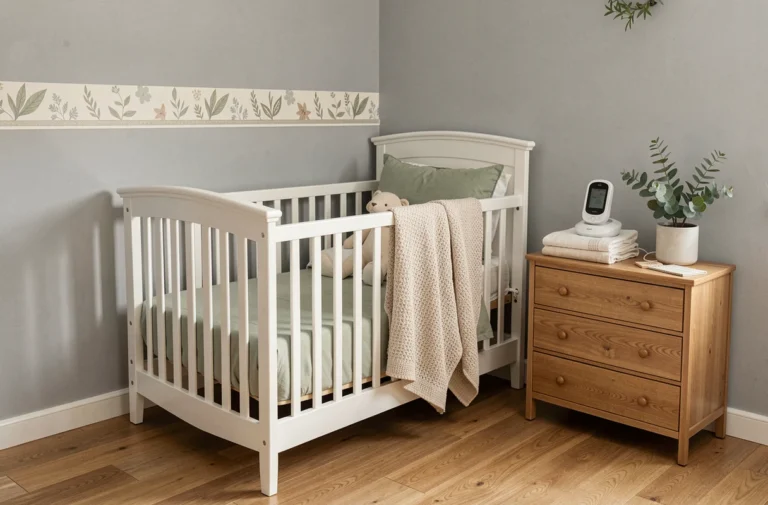
Setting up the baby’s room lays the foundation for a calm daily life. First, think of a crib with a firm mattress, a sleeping bag, a fitted sheet, and a mattress protector. Set up a changing table near a dresser to facilitate diaper changes, add a soft nightlight, and a baby monitor to keep an eye on the baby, especially during the first nights without a reference point.
For clothing, prioritize simplicity and practicality: about ten bodysuits and pajamas, several pairs of socks, one or two hats, a baby nest for outings, not to mention bath linens like a hooded towel and soft towels. For care, consider suitable cleansing gel, moisturizing cream, diapers, and wipes.
The organization of meals depends on the choice to breastfeed or not. For breastfeeding, a specific pillow, nursing pads, and possibly a breast pump are invaluable. If you opt for bottle feeding, plan for several bottles, nipples, a bottle warmer, a sterilizer, and some bibs to handle little accidents.
To go out without stress, equip yourself with a certified car seat, a stroller suitable for the baby’s age, a baby carrier or a wrap, and a well-thought-out diaper bag. From the first weeks, offer a play mat, a few small toys, and a stuffed animal to spark your child’s curiosity.
Here is an overview of the equipment to prepare so everything is ready on the big day:
- Room: crib, mattress, changing table, dresser, nightlight, baby monitor
- Clothing: bodysuits, pajamas, socks, hat, baby nest, bath towel
- Care: diapers, wipes, cleansing gel, moisturizing cream, toiletry kit, bathtub
- Meals: nursing pillow, bottles, bottle warmer, sterilizer
- Transport: car seat, stroller, baby carrier, diaper bag
- Play: play mat, toys, books, stuffed animal
A well-constructed baby registry, without frills, refocuses preparation on the essentials. Each of these choices contributes to a more serene welcome and limits unnecessary clutter.

Adapting your home and daily life: practical tips for a smooth transition
The arrival of a baby transforms life, but also the home. Securing the environment becomes the first mission: install gates at stairs, put socket covers in place, add foam to the corners of low furniture. Store cleaning products, medications, and dangerous objects out of reach, and check the safety of windows. Furniture that the child could climb on must be securely fixed.
In terms of organization, anticipate: distribute household tasks, plan for regular laundry, cook and freeze a few meals for the days when fatigue takes over. This pragmatic management of daily life prevents exhaustion and frees up time to enjoy your child.
Parental rest should not be sacrificed: seek help from family, friends, organize shifts or visits according to the need for calm or support. If other children are present, involve them in the daily life of the newborn while preserving dedicated moments for each.
Taking care of oneself, physically and mentally, remains a priority after birth. Talk to healthcare professionals, join support groups, and exchange openly about the realities of daily life. Welcoming a baby means accepting to write a new family chapter, full of adjustments, surprises, and shared discoveries, day after day.